

Understanding how past performance influences future hiring success is essential to building effective, resilient teams. Hiring decisions often extend beyond evaluating resumes and qualifications—they rely on assessing patterns of achievement, problem-solving ability, and adaptability demonstrated in previous roles. By analyzing an individual’s historical performance, organizations can identify traits and behaviors that consistently contribute to positive outcomes. This approach not only reduces hiring risks but also increases the likelihood that new hires align with organizational goals and culture. Insights from past performance provide a data-informed foundation that complements traditional interviewing techniques, giving employers a clearer perspective on potential future contributions.
Incorporating tools like capacity modeling can further refine this process by helping organizations quantify workload management, team efficiency, and resource allocation when evaluating candidates. By understanding both past achievements and how a candidate might perform under varying responsibilities, employers can make more strategic hiring decisions that support long-term growth and success.
The Limitations of Traditional Hiring Metrics
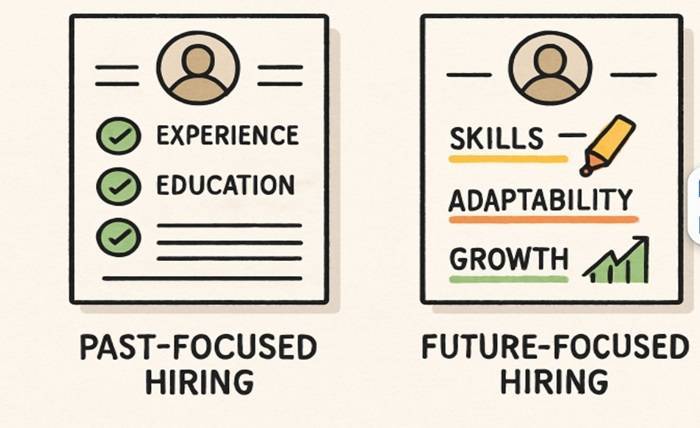
Traditional hiring has long measured candidates through the lens of their prior job titles, years in the field, and academic achievements. While these standards have value, they often fall short in predicting how well a candidate will perform in evolving or newly created roles. Recent studies show that almost nine out of ten employers now value job-specific certifications and skills over traditional degrees, signaling a significant paradigm shift.
Relying too heavily on static metrics can cause organizations to overlook high-potential individuals—particularly those who have excelled in nontraditional career paths or who bring diverse experiences beyond formal education. This recognition is prompting companies to recalibrate their recruitment standards and seek ways to uncover the most adaptable and forward-thinking talent.
Emphasizing Transferable Skills
Transferable skills—problem-solving, adaptability, collaboration, and strong communication—are becoming more important in today’s hiring. Emphasizing these key skills helps build organizational resilience, as employees with transferable abilities can switch between tasks, roles, and business challenges with ease.
By assessing these abilities, organizations ensure they’re not just filling immediate vacancies but are instead cultivating a workforce that can weather change and drive innovation. This skills-first mindset is instrumental for staying competitive in quickly shifting markets.
Predictive Hiring Models: A Data-Driven Approach
Amid technological advancements, predictive hiring models are transforming the recruitment process. These models use data analytics to identify candidates with the greatest potential for success—not just based on what they’ve done, but also on how they’ll fit within the organization. Factoring in data such as behavioral assessments and cultural alignment enables businesses to move beyond resume checklists and focus on evidence-based indicators of future performance.
Organizations leveraging predictive hiring tools are seeing measurable improvements in retention and engagement, as hiring success rates are boosted by nuanced candidate insights rather than outdated proxies.
The Role of Behavioral Assessments
Behavioral assessments—tests and questionnaires that gauge workplace preferences, learning styles, and interpersonal tendencies—are becoming core components of hiring frameworks. These assessments uncover traits that aren’t always visible in interviews or resumes, helping organizations predict not only technical mastery but also how candidates will collaborate and contribute to company culture.
Incorporating behavioral data into decision-making ensures candidates align with both the demands of their roles and the team’s unique dynamic, driving overall organizational performance.
Continuous Learning and Development
In a landscape where industries and technologies shift rapidly, adaptability and continuous learning are essential attributes. Employers now actively seek out candidates who pursue ongoing skill development and who view learning as a lifelong process. This focus acknowledges that while past performance provides meaningful context, the real driver of future hiring success is a willingness—and demonstrated ability—to grow and adapt.
This approach enables organizations to evolve alongside industry trends and future-proof their teams by building a culture that values and rewards learning.
Balancing Experience with Potential
Experience and historical performance remain important, but the most effective hiring strategies balance these with a keen eye toward potential. Companies benefit from identifying those who not only have a record of achievement but also exhibit curiosity, initiative, and a growth mindset—traits that propel teams forward in changing environments.
Ultimately, integrating these nuanced measures helps organizations cultivate teams that are technically skilled, highly adaptable, and positioned for consistent, long-term success.
Conclusion
As hiring evolves, the emphasis is moving away from purely traditional methods toward holistic, data-driven, and future-focused approaches. By valuing capacity modeling, predictive analytics, continuous skill development, and the full range of a candidate’s abilities, organizations can optimize their hiring outcomes. Embracing this transformation means building not just a workforce, but a dynamic engine for sustained organizational growth and innovation.