

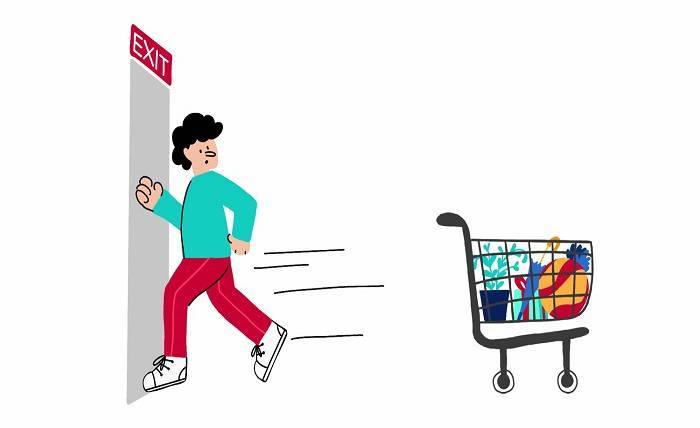
In e-commerce, the majority of costly problems arise when customers complete their final click (by hitting “purchase” after having searched and selected products). They continue to search for and select products but abandon their shopping carts before making a purchase. Cart abandonment is an ongoing problem for digital businesses and is a very large limitation to them. According to research done by the Baymard Institute, a digital business research organization, approximately 70% of all cart transactions are abandoned at checkout. This means that only 3 out of every possible transaction will actually take place for most digital business. For a digital business that has a goal of developing or growing its operation this is more than a failed sale; it also means that a digital business has lost marketing expenditures, paid more to acquire customers and have additional expenses associated with inventory management and determining the total value of customers over time. This article will focus on both the financial implications of cart abandonment as well as the potential benefits obtained by improving the checkout experience.
1. The High Cost of Digital Friction
Cart abandonment is more than just a missed sale; it is a drain on marketing efficiency. When a shopper “ghosts” a transaction, the capital spent on social media ads and Search Engine Marketing (SEM) to get them there is effectively wasted, significantly inflating your Customer Acquisition Cost (CAC).
Why Shoppers Walk Away
Comprehensive research by the Baymard Institute identifies the primary drivers of abandonment. Their data highlights several “friction points” that kill conversions:
- Extra Costs: Unexpected shipping fees, taxes, or service charges (cited by 48% of users).
- Forced Account Creation: Requiring a user to create a profile before buying (26%).
- Complex Checkout Processes: Too many form fields or confusing navigation (22%).
- Delivery Speed: Slow estimated shipping times (22%).
2. Speed as a Strategic Asset
In the digital economy, speed is synonymous with trust. A laggy payment page creates “transactional anxiety,” leading customers to wonder if the site is secure or if their card will be charged twice.
The Three-Second Rule
According to Google, if the page load time is increased from one to three seconds, the chances of bounce are increased by 32%. The page load time can be optimized by:
- Form Field Compression: Reducing the number of fields to the absolute minimum required for shipping and billing.
- Address Autocomplete: Using global mapping APIs to fill in addresses instantly based on just a few keystrokes.
- Digital Wallets: Integrating “One-Click” options like Apple Pay, Google Pay, or PayPal to bypass manual data entry entirely.
3. Transparency and Consumer Trust
All over the world, there are more and more consumer protection agencies taking action against designers who use dark patterns to manipulate how much customers pay when they are purchasing products online. However, in addition to being required by law to provide a clear and transparent user interface, this type of activity can be extremely damaging to your business.
To reduce cart abandonment triggered by uncertainty, businesses should implement the following:
- Upfront Pricing: Display all shipping costs, taxes, and fees on the product page or as soon as an item is added to the cart to avoid “sticker shock” at the finish line.
- Visible Security Signals: Use recognizable trust badges and ensure the site is PCI DSS compliant to reassure users that their financial data is encrypted.
- Clear Return Policies: A visible “Easy Returns” or “Money-Back Guarantee” near the checkout button reduces the perceived risk of the transaction.
4. Payment Orchestration
One of the most common reasons for cart abandonment is the lack of the preferred payment option. Although credit cards are still the preferred choice for many, the rise of alternative payment methods (APMs) has changed the way consumers think about payment.
Offering multiple payment options can go a long way in reducing cart abandonment. To begin with, real-time bank transfers allow users to pay directly into an account, while the option of Buy Now, Pay Later (BNPL) allows users to purchase high-ticket items through the flexibility of installment plans.
5. Mobile-First Optimization
Mobile devices account for the majority of all e-commerce website visits, but these websites experience a higher rate of abandonment than do their desktop counterparts. The primary reason for this is due to the “Fat Finger Syndrome” caused by the difficulty of completing lengthy forms with such small touchscreen display areas.
By optimising for the ‘thumb zone’ on mobile devices, the conversion rates for mobile browsers will come closer to being equal to those of traditional desktop purchasers.
Conclusion
Although this may seem more like a technology-based solution, what really matters is that we are making a commitment to a valuable customer experience. Companies can be successful financially by providing faster service, transparent pricing, and multiple payment methods.
Brands will win out in today’s economy because they do whatever they can to create an easier way for their customer to say “yes”. The ultimate advantage over your competition is having a seamless and quick checkout process that converts exit intent into sales and converts brand loyalty into future revenue.