

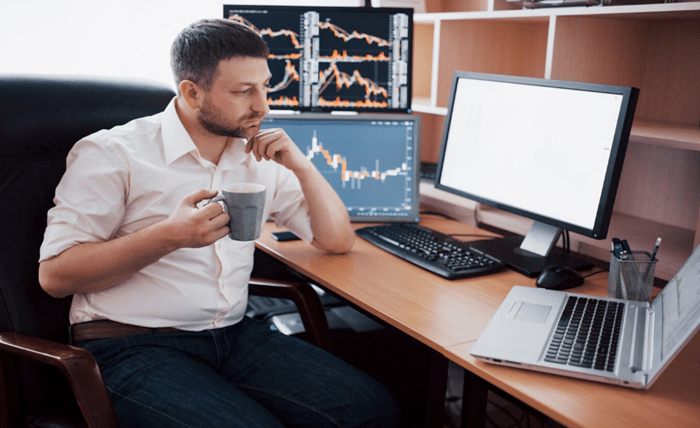
Proprietary trading, or “prop trading,” happens when financial firms use their own capital to trade markets for profit. They do not manage clients’ funds and don’t charge commissions. These firms, such as Supertrade, rely on the skill and strategy of their traders to generate returns. This model can become a scalable and lucrative opportunity for the firm and the trader. Unlike traditional asset management, success in prop trading is tied directly to trading performance.
How Technology Is Democratizing Trading
In recent years, platforms like Supertrade have made it easier for traders to enter the proprietary trading space. Advanced trading tools, real-time data analytics, and remote access to markets have removed many of the historical barriers to entry. The infrastructure that is needed to participate in sophisticated trading strategies is now accessible to individuals around the world.
With just a reliable internet connection and a trading setup, anyone can take part in the fast-paced world of trading.
The Rise of the Independent Trader
The modern workforce is changing. Remote work, freelancing, and performance-based income models are becoming more popular. Many are no longer satisfied with slow-moving careers or traditional financial advice.
Prop trading fits perfectly into this new mindset. It offers flexibility, autonomy, and direct reward for effort and skill. Traders don’t need to raise capital or find clients; they trade with firm funds and keep a share of the profits.
Volatility Creates Opportunity
Global markets are becoming volatile due to political shifts, economic uncertainty, and emerging asset classes like cryptocurrencies. These changes introduce some risks for long-term investors, but they also offer new opportunities for traders who can adapt quickly and exploit short-term movements.
Prop traders are trained to manage risk and react fast to any changes in the market. Their strategies are often built to capitalize on both upward and downward price swings. This is very important in conditions where markets can change their direction in minutes, if not in seconds.
New Advanced Firm Models and Access
Modern prop trading firms are no longer closed-door institutions that hire only experienced professionals or Ivy League graduates. Today, many firms use trading challenges, simulations, and funded account programs to discover talent. Traders who want to start earning can prove themselves without the need to risk personal capital. They can often start with a demo or a small live account and scale up based on performance.
This evolution makes it easier for skilled individuals to break into the competitive industry. Traders are evaluated on results, not resumes. This approach helps to create a pathway for anyone with dedication and skill to succeed.
A Cultural Shift Toward Performance-Based Finance
Younger generations are becoming increasingly skeptical of traditional financial systems. They prefer transparency, personal control, and technology-driven solutions. Prop trading embodies these values. It’s clear-cut: perform well, and you’re rewarded; perform poorly, and the market holds you accountable.
This shift toward accountability and personal responsibility is helping redefine what a career in finance looks like. For many, prop trading offers an empowering alternative to conventional paths.
Institutional Interest and Industry Impact
As proprietary firms grow in size and influence, traditional financial institutions start paying more attention to them. Banks and asset managers have to deal with tighter regulations and higher operational costs. In contrast, prop firms operate with agility, speed, and innovation.
This dynamic could lead to further partnerships, acquisitions, or even a reimagining of institutional trading desks. Prop traders may soon play a larger role in liquidity provision, price discovery, and overall market structure.
The Challenges of Prop Trading
While the potential rewards are significant, prop trading comes with high risks, too. Traders must manage their emotions, follow strict risk rules, and remain adaptable in a constantly changing market environment. The learning curve can be steep, and consistency takes time to develop.
However, the support structures available today: mentorship, online education, and community networks. This all makes the journey more achievable than ever before.
Final Thoughts
Proprietary trading is growing in popularity for good reason. It offers traders a blend of independence, performance-based rewards, and scalability. With the help of modern platforms and evolving firm models, prop trading is becoming more accessible to individual traders worldwide.
As financial markets continue to evolve, so will the demand for fast, intelligent, and strategic participants. Prop trading may soon move from niche to mainstream, and this will make it one of the most exciting developments in the future of finance. Whether you’re a new trader or an experienced investor, this space is worth your attention.