

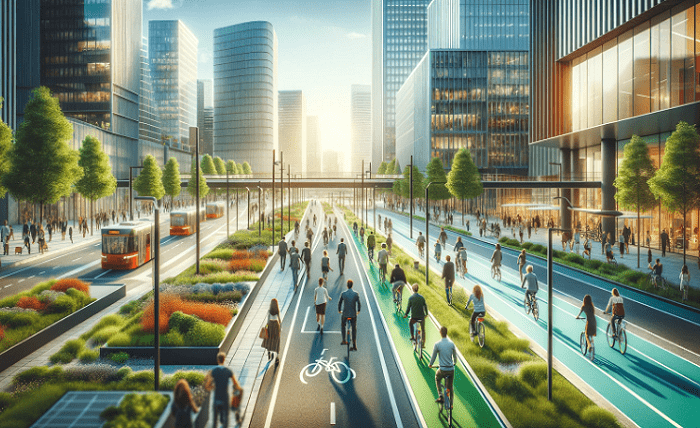
Cities aim for sustainability. Bicycling leads this change. It offers a clean way to travel. It is efficient and fun. More people bike than before. This lowers car use. Emissions drop as a result. It also boosts health for all. Bike paths are becoming common. They connect whole neighborhoods. Bikes help make cities quiet. They also keep the air clean. Every new bike path adds benefits. This trend will likely grow. It makes city life better.
Understanding the Shift
The shift to bikes has been gradual. It started with environmental awareness. Cities are adding more bike lanes. They offer bike rental programs. This makes biking easy for everyone. It helps people leave cars behind. Bike use is rising fast. Cities promote biking as safe and green. They plan more bike lanes each year. These efforts help the planet. They also make cities nicer to live in. More bikes mean less traffic and noise.
Environmental and Health Benefits
Biking reduces greenhouse gases. Bikes do not emit pollutants. They use less space than cars. This eases traffic. Biking boosts health. It cuts heart disease and obesity risks. Mental health improves, too. Biking offers freedom and fun. It connects us with nature. Cities become quieter and cleaner. More biking spaces can mean more green areas. This shift is vital for our future. Biking makes cities more livable.
Community and Lifestyle Changes
Bicycling reshapes community interactions. It promotes a more engaged and connected lifestyle. Public spaces become more vibrant. They are filled with cyclists and pedestrians instead of cars. Festivals, markets, and public events gain popularity. These gatherings are more enjoyable without the noise and danger of cars. Streets turn into places for socializing. Everyone from kids to seniors joins in. Biking events bring communities together. They encourage active participation. Bike-to-work days are common. They show the benefits of cycling. More people choose bikes over cars.
Cities invest in bike-friendly spaces. Cafes and shops near bike lanes thrive. They cater to cyclists. Bike racks are everywhere. Safety improves as more people bike. Accidents decrease. This makes cities safer for all. Health improves across the community. People meet more often and make new friends. This strengthens community bonds. Biking is great for mental health. It reduces stress and increases happiness. Cleaner air benefits everyone. Less car use means less pollution.
Urban spaces transform. Car parks turn into parks and plazas. More green areas appear. They offer spots for rest and play. Cycling clubs grow. They organize rides and events. Schools promote biking. They teach kids about safety and health. This education is vital. It builds lifelong habits. Cities become closer-knit and sustainable. This shift to cycling creates healthier, happier urban environments.
Tackling the Challenges
Urban infrastructure must evolve. More bike lanes and safer storage are needed. Theft and safety concerns are significant. Cities are responding. They’re implementing better lighting and security for cyclists. Education campaigns teach road safety. This ensures that both cyclists and drivers share roads responsibly. Cities invest in surveillance. They add cameras along bike routes. This deters theft. It makes cycling safer. New laws protect cyclists. They ensure cars keep safe distances.
Cities also improve road surfaces. Smooth paths are safer for bikes. They reduce accidents. Signs and signals for bikes increase. They guide cyclists and control traffic. Public workshops offer safety tips. They teach bike maintenance. Skills like fixing a flat tire are covered. These efforts boost cyclist confidence. They encourage more people to bike.
Bike-friendly public transport grows. Buses and trains accommodate bikes. This helps cyclists travel longer distances. It integrates biking into daily commutes. Awareness programs highlight the benefits of cycling. They address common fears and misconceptions. Community leaders promote cycling. They share their experiences. This inspires others to try biking.
Efforts to tackle these challenges are ongoing. They require time and investment. Yet, the benefits are clear. Safer, more accessible biking leads to healthier, more sustainable cities. These changes are essential for the future of urban transport.
Future Prospects for Urban Cycling
The trajectory for urban bicycling is decidedly optimistic. As urban agglomerations perpetuate their expansion, the exigency for sustainable modalities of transport becomes irrefutably prominent. Urban schematics are progressively being reconfigured to incorporate velocipedal locomotion into the core of city planning paradigms. Projections anticipate an intricate lattice of bicycle conduits that could potentially amalgamate extensive urban territories, enhancing commuter connectivity. Furthermore, the ascent of electric bicycles is catalyzing this transformation, ameliorating the accessibility of cycling by diminishing the physical exertion required, thereby broadening the demographic swath of potential cyclists.
Technological innovations are poised to refine these vehicular pathways, augmenting their safety and adaptive capabilities, which, in turn, elevates the public perception of cycling from a mere recreational activity to a viable transport alternative. Legislative frameworks are also pivoting towards bolstering cyclist incentives, encompassing fiscal encouragements for electric bicycle acquisition and the fortification of cyclist-centric statutes. This proliferation of cycling is anticipated to be a pivotal element in the redefinition of urban mobility, ensuring its indispensability in the sustainable metropolises of the forthcoming epoch.
Conclusion
Bicycling is a key component of sustainable urban living. It beautifies cities and improves quality of life. It is vital for the future of urban transport. As cycling becomes more popular, its benefits multiply. It leads to cleaner air, healthier citizens, and more lively communities. Cycling is not just a mode of transport; it’s a pathway to a sustainable future.